Course Objectives
To provide correct, authentic and authoritative training in Pranayama based on traditional texts and science in the Kaivalyadhama Lineage.
With Pranayama generating much interest in the current yoga culture worldwide and it being an immensely important and sensitive practice, it is pivotal that Pranayama be taught correctly from a traditional, technical and scientific perspective.
Keeping the above in mind Kaivalyadhama has designed a course where students will gain a proper understanding of Pranayamic practices from an intellectual (traditional, technical and scientific) as well as practical and experiential point of view so that they can correctly teach the same to students in various settings.
The overall theme of this course will revolve around the definition, the technique/techniques (and its variations) and the outcome of Pranyamic practices. The outcome will be discussed based on Ayurveda as well as modern science.
First Year
Second Year
Third Year
Structure of the Course
- All the topics with the exception of guest lectures will be part of the examination. Also the last year will be dedicated to the teachers trainee undergoing teaching practical sessions in various settings of the institute.
- Each year is further divided into three steps/week where every approximately four Months for one week (full time) the student will study and practice pranayama.
- Upon their return, they are accorded sufficient theory and practical homework which is monitored from time to time. The students are given written assignments and practice assignments to be done in the four months when they are home to progressively enhance their practices.
- At the end of each step, people are given goals in terms of pranayama and kriyas practice. Periodically they submit their practice logs having objective parameters including inhale time, pulse, nostril status to record their practices logs comprehensively are per the goals given.
- The passing percentage in evaluation has been set as 60%.
- These records of assigned goals for ever four Months, practice logs, are clearly identifiable and verifiable progress in practice which is double checked when they return every four Months, for example at the end of first year every one is at 8 seconds or more inhale capacity, 3X120 in Kapalbahti which was achieved progressively.
- This 4-month period is needed for the students to progressively deepen their practice by daily routines.
- At the end of each year in the final step the progress of the student will be evaluated by a detailed assessment process/exam from a practical as well as a theoretical point of view. The Exams could last anywhere from 3 days to whole week depending on what has been covered. The majority of the exams will be evaluated by the non – TTC faculty to make them objective. Only upon successful completion of these exams and assignments for the year will the final certification to teach will be awarded.
- Full attendance in all the 6 steps of the second and third year of the course is mandatory for the certificate.
Lead Teacher
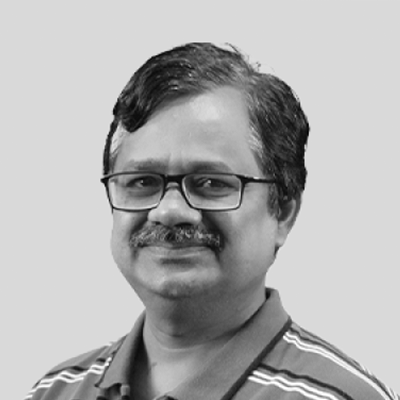
Shri. Sudhir Tiwari
Shri. Sudhir received his first training under the guidance of Swami Digambar ji, a disciple of Swami Kuvalayananda and his father Dr. Om Prakash Tiwari.
Brought up at Kaivalyadhama Yoga Institute, Lonavala, India amidst rich traditional yogic heritage of Swami Madhavdasji Maharaj, Swami Kuvalyanandaji and Swami Digambarji, a tradition kept alive by his father and a well known Pranayama master, Dr. O. P. Tiwari.
Sudhir received his primary and advanced Yogic and Ayurvedic training from Swami Digambarji which included the study of traditional texts, mantra yoga, fire ceremony, pranayama and various aspects of adhyatm (spiritual) yoga. Sudhir also learnt pranayama and Hathapradipika from his father.
So now he travels all around the world conducting workshops in theory and practice of Yoga (Asana, Pranayama, Meditation, Chanting) and Ayurveda and with his familiarity of alternative western medicine he also correlates these disciplines. His Mantra, Breathe Positive, Breathe Yoga.
Sudhir’s goal is to present yoga not just as asanas but as an experiential practice encompassing but not limited to Yamas, Niyamas, Asana, Pranayama and meditational techniques, mantra yoga and techniques of ishwar pranidhana of Patanjali.
Associate Teachers
Dr. Sharadchandra Bhalekar
Asst. Professor
Dr. Satish D. Pathak
Asst. Director – Research (SRD)
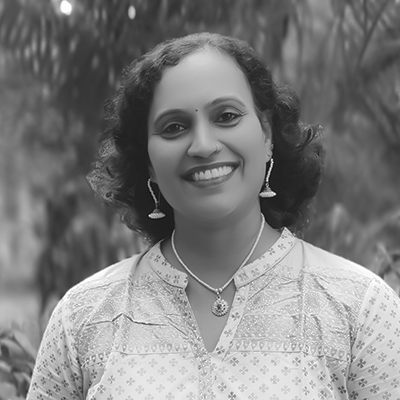
Dr. Praseeda Menon
Research Officer (Psychology)
Dr. Supriya Kulkarni
Ayurveda and Yoga Consultant
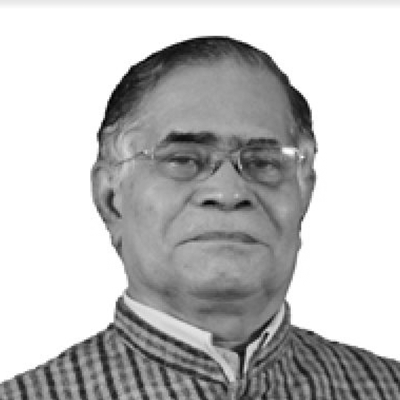
Shri. R. K. Bodhe
Consultant
Shri. Dileep Dauneria
Consultant
Student Reviews
This is not an end, but a new beginning. exploration and learning at the field of yoga and science never end !!!
The experience was quite intense. I am very happy to be here for the course.
Gallery


This Course is Done in Nine Sessions Over Three Years
We are launching new batch of 2nd year of this course from 21st September 2025 to 27th September 2025 and admissions are open. The second and third years will cover the remaining 6 sessions over a period of two plus years.
Eligibility
- Participants who have completed 1 Year TT in Pranayama under Sudhir Tiwariji.
- Students will be expected to learn all the Six Kriyas. Exceptions can be made in case of medical limitations.
Course Fees
- 2500 Euros for each year, plus room and food extra. (Remittable @ 2500 Euros per year in advance.)
- Exam Fees: 200 Euros per year
Explore the accommodation options:
Click Here
It is advisable to book accommodation after admission is confirmed well in advance to get a room of your choice.
Documents to be Submitted
Documents to be submitted after completing the registration:
- Photograph.
- Copy of the 1st Year TT Pranayama Certificate under Sudhir Tiwari.
Email: ceooffice@kdham.com
Residential Course Dates
Second Year
Step 1: 21st September to 27th September 2025 (evening finish) — Lonavala
Step 2: 8th February to 14th February 2026 (evening finish) — Lonavala
Step 3: 21st May to 30th May 2026 (afternoon finish) — Lonavala
(Arrival 20th May 2026)
Third Year
Step 1: 24th November to 30th November 2026 (evening finish)